
Custom gear manufacturing in Syria
Spur, helical, bevel and internal gears, splined shafts and splined bushings, made in our Damascus workshop from a worn sample or a drawing, as a single piece or a batch.
- 6 typesFrom spur gears to splined bushings
- One piece or a batchFor maintenance and production lines
- From a sampleOr from an engineering drawing
- Since 1999Our daily work in Douma
The gears we make
Turning and cutting gears has been our daily work since 1999.
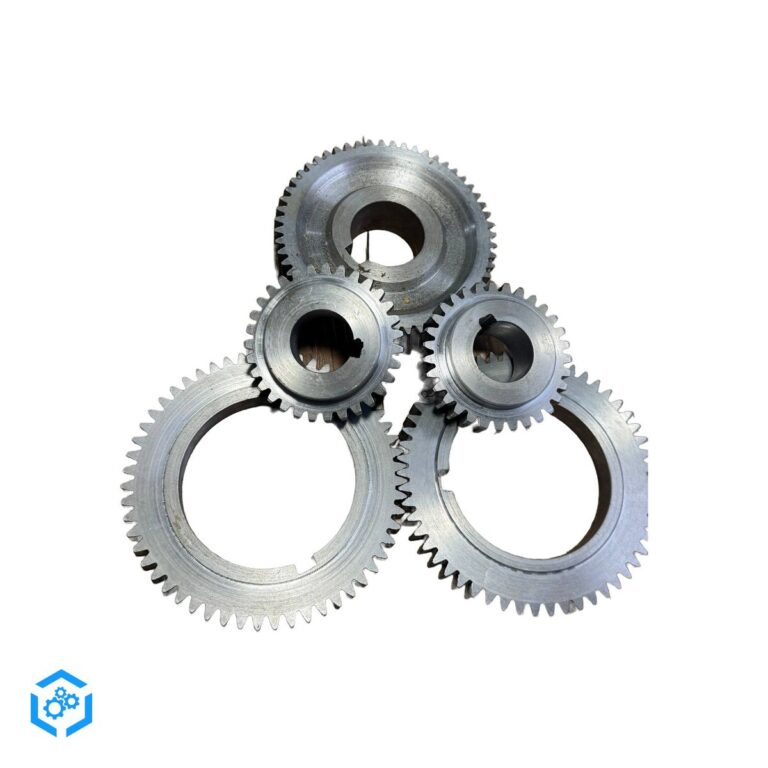 Spur gearsStraight teeth parallel to the shaft, the most common in gearboxes. Single, double, or with a bearing seat.
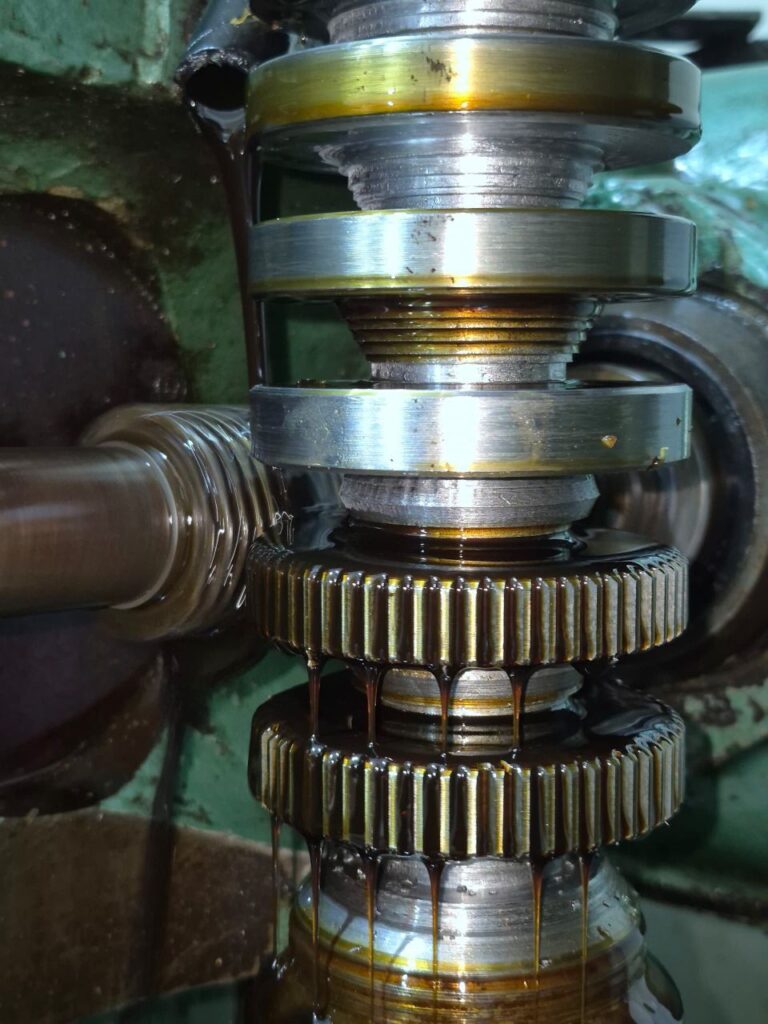 Helical gearsAngled teeth, so they mesh more smoothly, run quieter and carry a higher load. We cut them by hobbing.
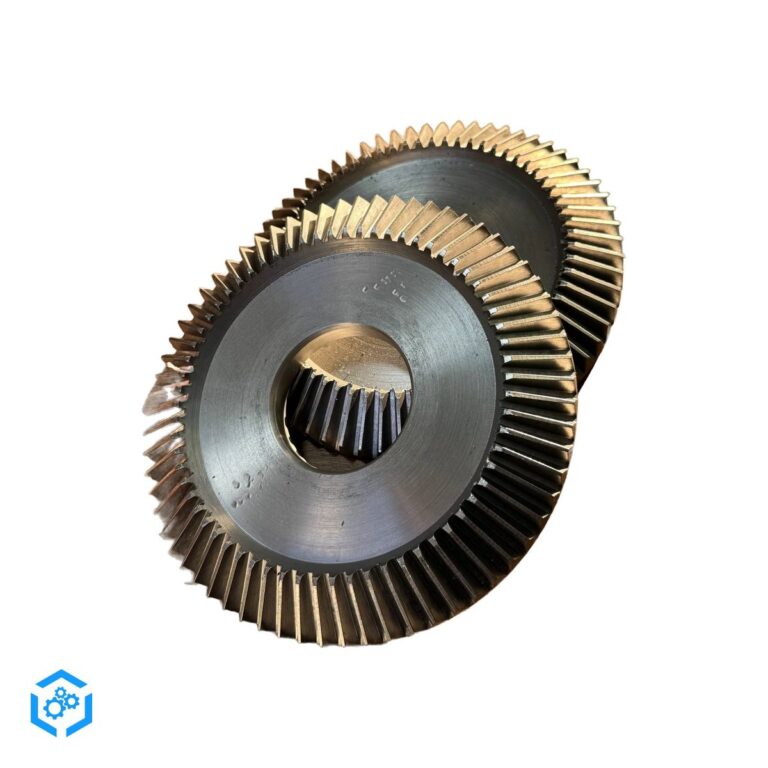 Bevel gearsThey transmit motion between two intersecting shafts. We cut them on the dividing head, small and large diameters.
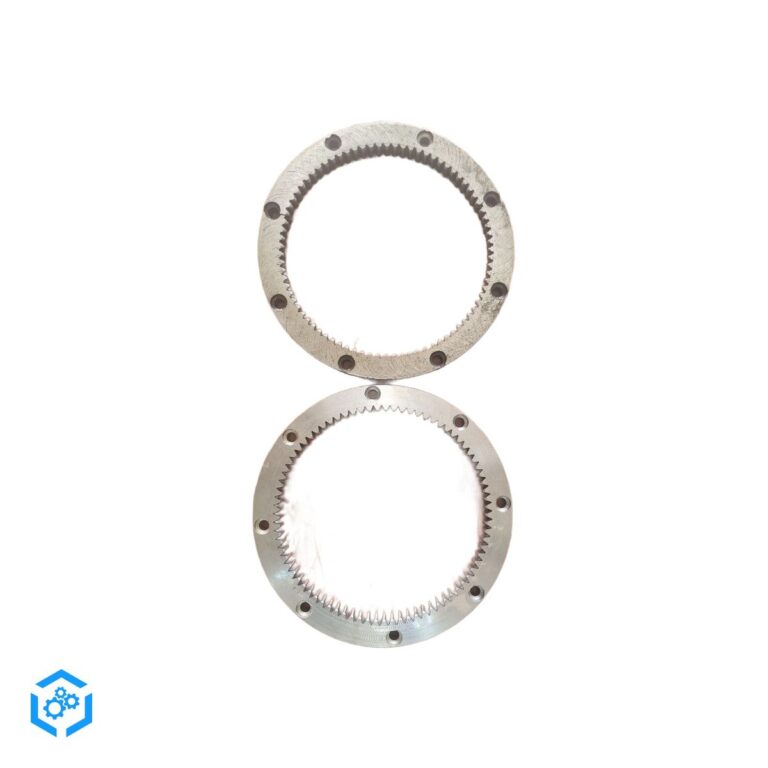 Internal gearsFor planetary systems, clutches and gearboxes. A hob cannot reach them, so we cut them by gear shaping.
 Splined shaftsThey carry the torque over a larger area than a key. We turn them, then cut the splines by hobbing.
 Splined bushingsThey fit the splined shaft precisely. We cut the internal splines on the gear shaping machine.
We also make engineering nylon gears for food lines and light loads, and when the load is higher we make the replacement in steel to the same size.
How we make a gear
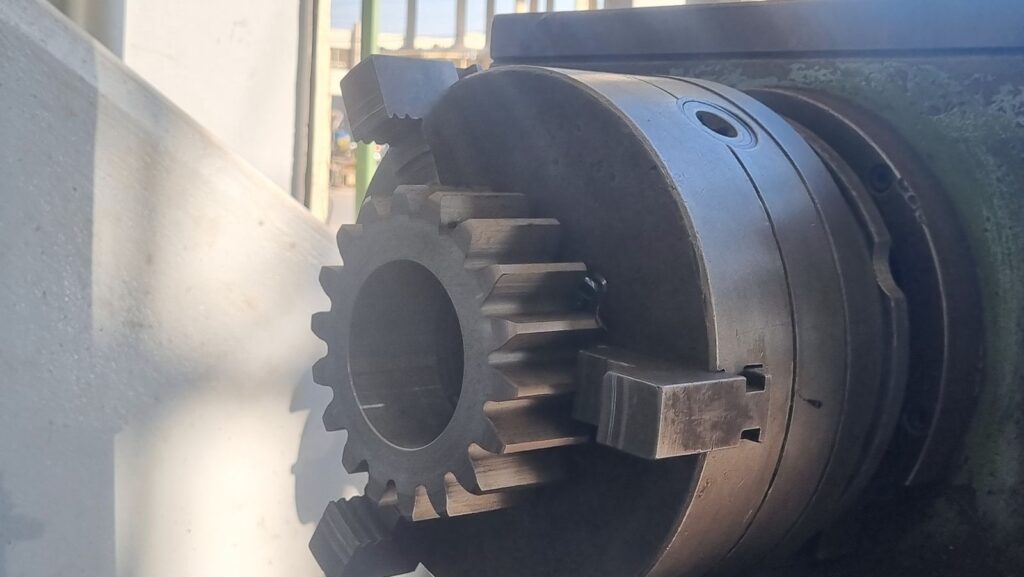
- 1TurningWe turn the blank: the outside diameter, the length and the bore. The accuracy of this stage decides the accuracy of the whole gear.
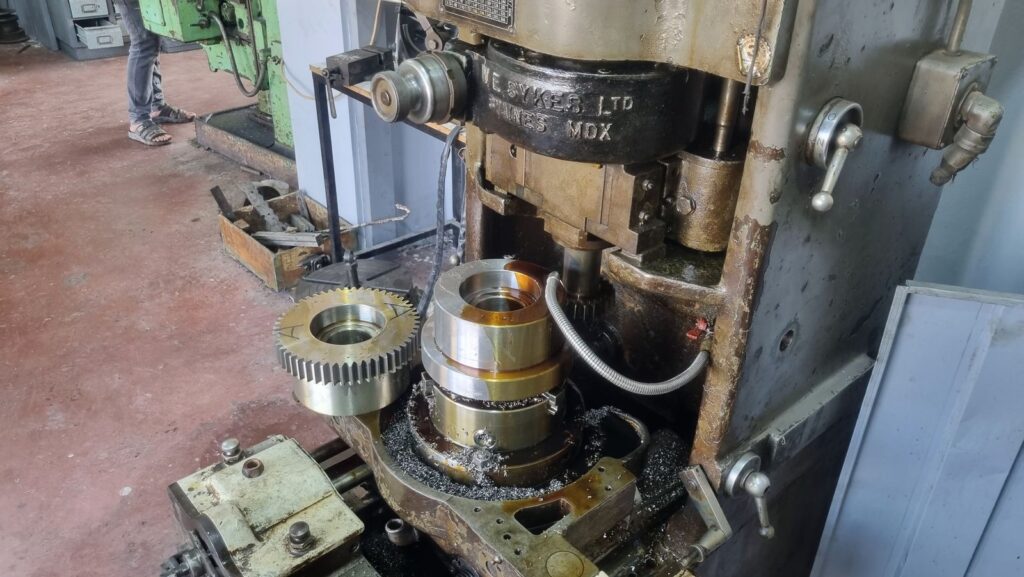
- 2Cutting the teethWe choose the method by the type of gear:
- Hobbing for spur and helical gears and splined shafts.
- Gear shaping for internal teeth and splined bushings.
- The dividing head on the milling machine for bevel gears.
- 3Inspection and deliveryWe check the tooth count, the dimensions and the mesh with the mating part, and deliver the gear ready to fit.
When does a gear need replacing?
A gear rarely breaks without warning. If you notice one of these signs, check the gearbox before the mating gear is damaged too:
- An unusual noise while it turns.
- Vibration in the gearbox or the machine.
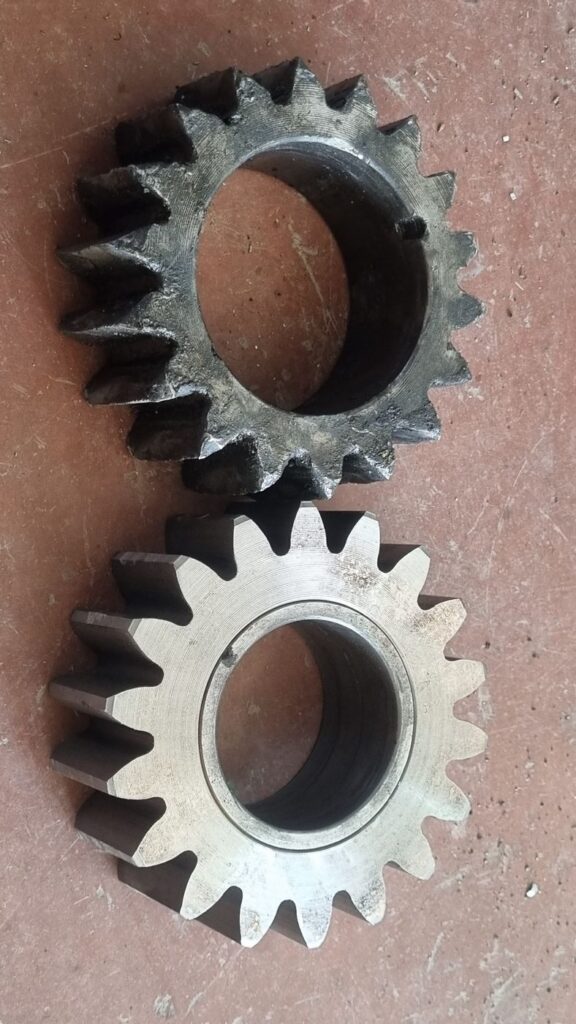
- Worn or broken teeth.
- Too much backlash between the two gears.
- Metal filings in the oil.
In a pair, the smaller gear wears faster because it turns more often, so we check it first and usually make it from a harder material.
What we need to make your gear
To price it quickly, send on WhatsApp:
- A photo of the gear next to a ruler.
- The number of teeth and the outside diameter.
- The bore diameter and the keyway.
- The material, if you know it.
- The quantity.
Missing some measurements? Send the worn gear and we measure it ourselves.
Send a photo of the gear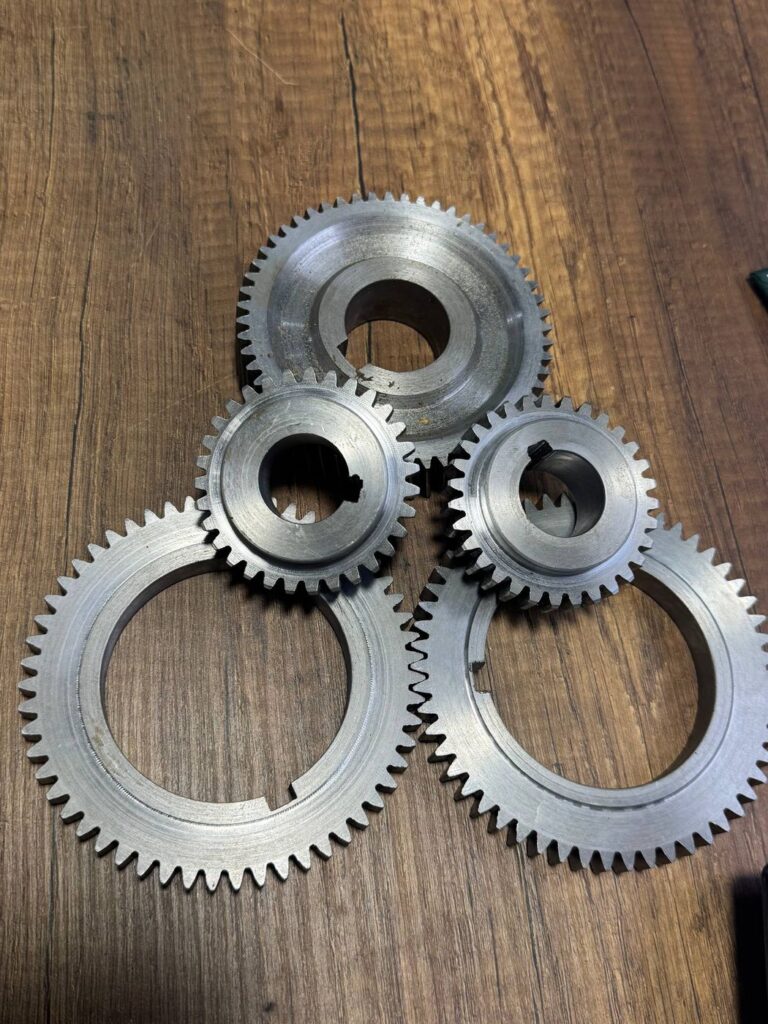
Questions about gear manufacturing
Do you make a single gear, or only batches?
Both. We make a single gear for maintenance and batches for production lines, to the same size and the same quality.
Can you replace a worn nylon gear with a steel one?
Yes, when the load needs it. We have made a steel replacement for a worn nylon gear to the same size, and it came out stronger than the original.
Do you make the gear and the shaft together?
Yes. We turn the shaft, cut the teeth or the splines on it, and make the mating bushing if you need it.
What is the difference between spur and helical gears?
Spur gear teeth are straight and parallel to the shaft. Helical teeth are angled, so they mesh more smoothly and run quieter. We make the same type the machine already uses.
Can you work from a gear's module and tooth count?
Yes. If you know the module or the diametral pitch, the tooth count and the bore, send them with a photo. If not, we measure the sample.
Have a worn part?
Send a photo of it next to a ruler, with the number of teeth and the diameter, and we reply with the material, the time and the price.
Have a project?
A new machine, a production line, or equipment that needs rehabilitation. Send a description and photos of the site, and we reply with a first concept before any agreement.